I’m not one for writing think-piece blog articles that make good LinkedIn fodder, but this subject has been eating away at me over the past few weeks as I’ve been watching the slow march of LLMs and AI take over the IT industry. I’m not convinced any programmers are going to be out of their jobs because of AI for the time being, but I do think what these tools can provide is changing how the world is looking at monitoring/observability, and more importantly, the collection of data.
Every day I’m seeing LLMs being used to write tools to visualize data in new ways or analyze it to find patterns, derive a root cause for events, or good old anomaly detection. The sheer number of companies creating new dashboarding and visualization tools is astounding.
I can’t scroll through Reddit anymore without getting new ads for these tools. Combined with the new growth, the existing companies in that space seem to be seeing a boom in user-created content as people are making more use of the data they have. It’s genuinely becoming less expensive and easier to make meaningful use of your monitoring data.
A Platform, Not a Point Product
Which leads me to where I wanted to take this blog post. It’s a good time to be in the collection business because collection is all you need1. For the past few years, I’ve said the words “OpenNMS is a platform, not a point product” a lot when explaining what we provide.
OpenNMS isn’t meant to be your full observability suite, alerting pipeline, and data warehouse wrapped into one product (that’s not to say that we can’t do that mind you). Rather, OpenNMS is meant to be a platform that you integrate into your OSS workflow - this OSS, though we also do this OSS too!
OpenNMS can act as a single point for collection of events and metrics data for a wide array of networking devices, element managers, and IT infrastructure systems. Not only can OpenNMS collect data from those systems, but it normalizes the data into open formats and can store it where you need it - everything from Prometheus to Kafka, ElasticSearch, OpenSearch, PostgreSQL, and a lot of other systems.
This wide range of compatibility enables us to exist as a platform in an ecosystem for our users – letting them integrate OpenNMS with their business processes instead of forcing them to have business processes that have to fit with their monitoring platform.
Getting Collection Right Isn’t Simple
It’s taken us over two decades to get to where we are today, and we’re still innovating. Orchestration and scheduling are not simple problems to solve for collectors, to say nothing of the nuances for collecting from a wide array of devices and the peculiarities of protocols like SNMP (Just ask us about Fiber Channel switches and 63-bit counters!).
Some of our largest users are collecting data from hundreds of thousands of networking devices and millions of monitored ports and doing it with OpenNMS servers that are remarkably svelte when it comes to specs.
Reliability Matters
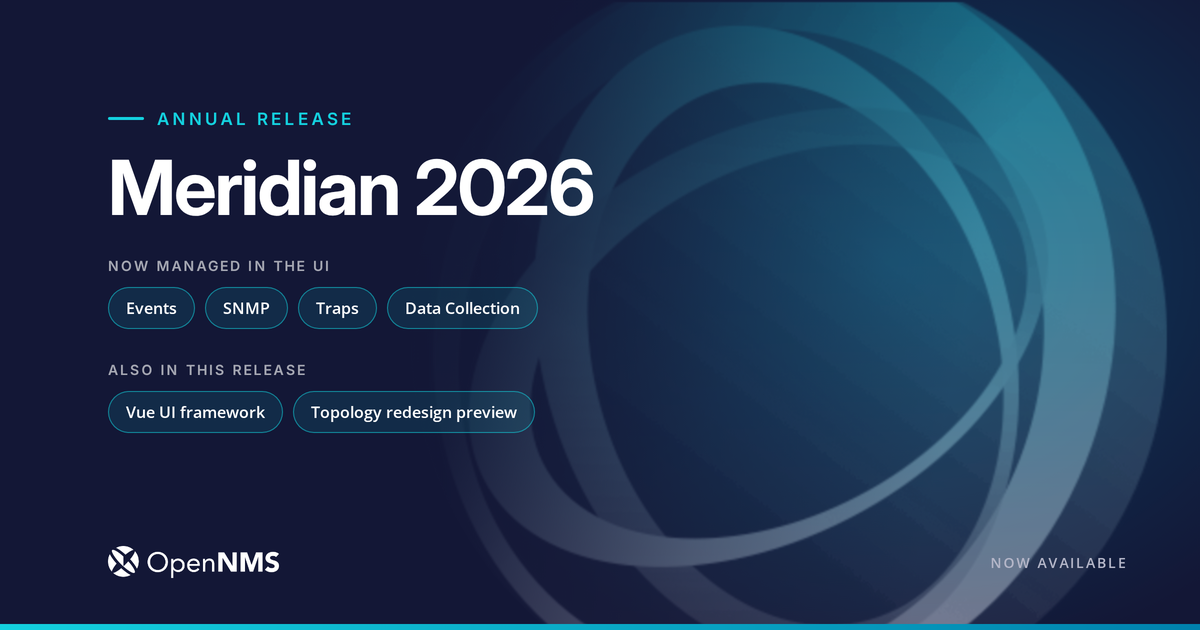
Reliability also matters a great deal when it comes to data collection. That’s why we offer a long-term support release with OpenNMS Meridian – providing API and feature stability as well as bug fixes and patches for up to 3 years.
Where Does AI Fit In?
I ran across a good blog post the other day titled “Automating AI Away”. The title was a bit tongue-in-cheek, but the concepts explained in it align well with what I see happening with LLMs in this space. Enabling LLMs to leverage more deterministic tools to access data is key for reliable results. OpenNMS can help deliver that kind of determinism and reliability for LLM tools.
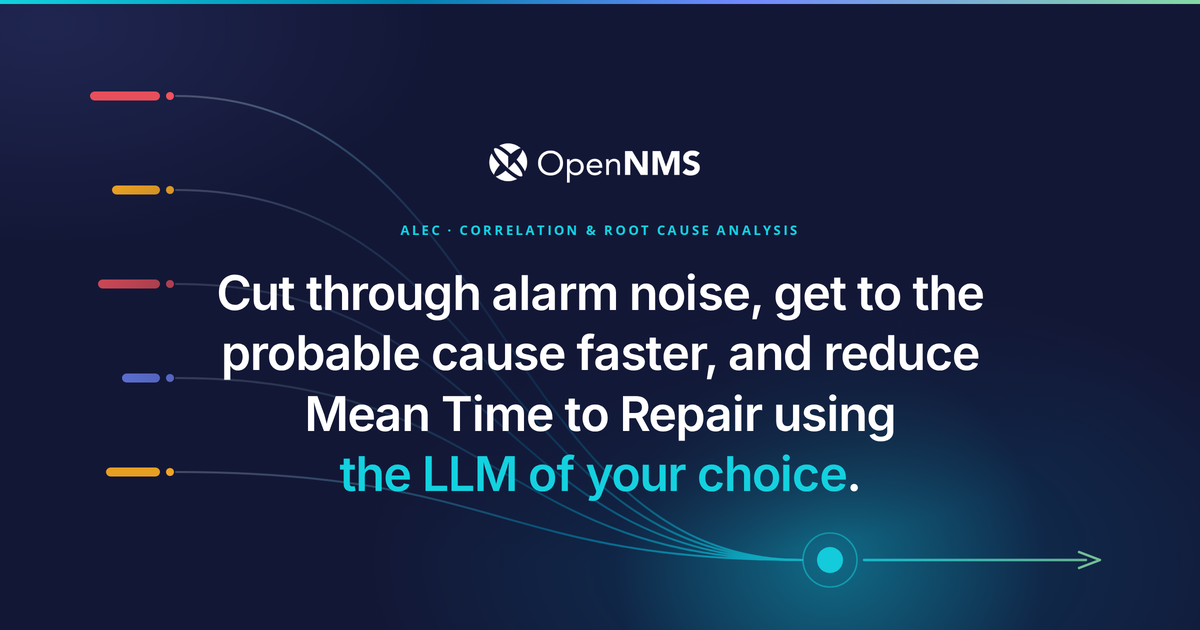
When our customers ask me about our AI Strategy or what we are planning to do with AI, I get to tell them about the work we are doing to improve ALEC but more importantly, I get to tell them it’s the things OpenNMS already does today that are most important for integrating with LLMs and AI tooling and we’re going to keep doing those things and improving them.
1 It’s not actually all you need but I think we’re all in a moment right now inspired by the Attention Is All You Need paper and I wanted to take some inspiration for the title. ↩
Jump to section
About the Author: Marshall Massengill